The program
A structured afternoon, three days a week
An independent, grassroots after-school program that combines martial arts instruction with required homework time and social-emotional leadership development, at no cost to families. Classes begin Monday, April 19, 2027.
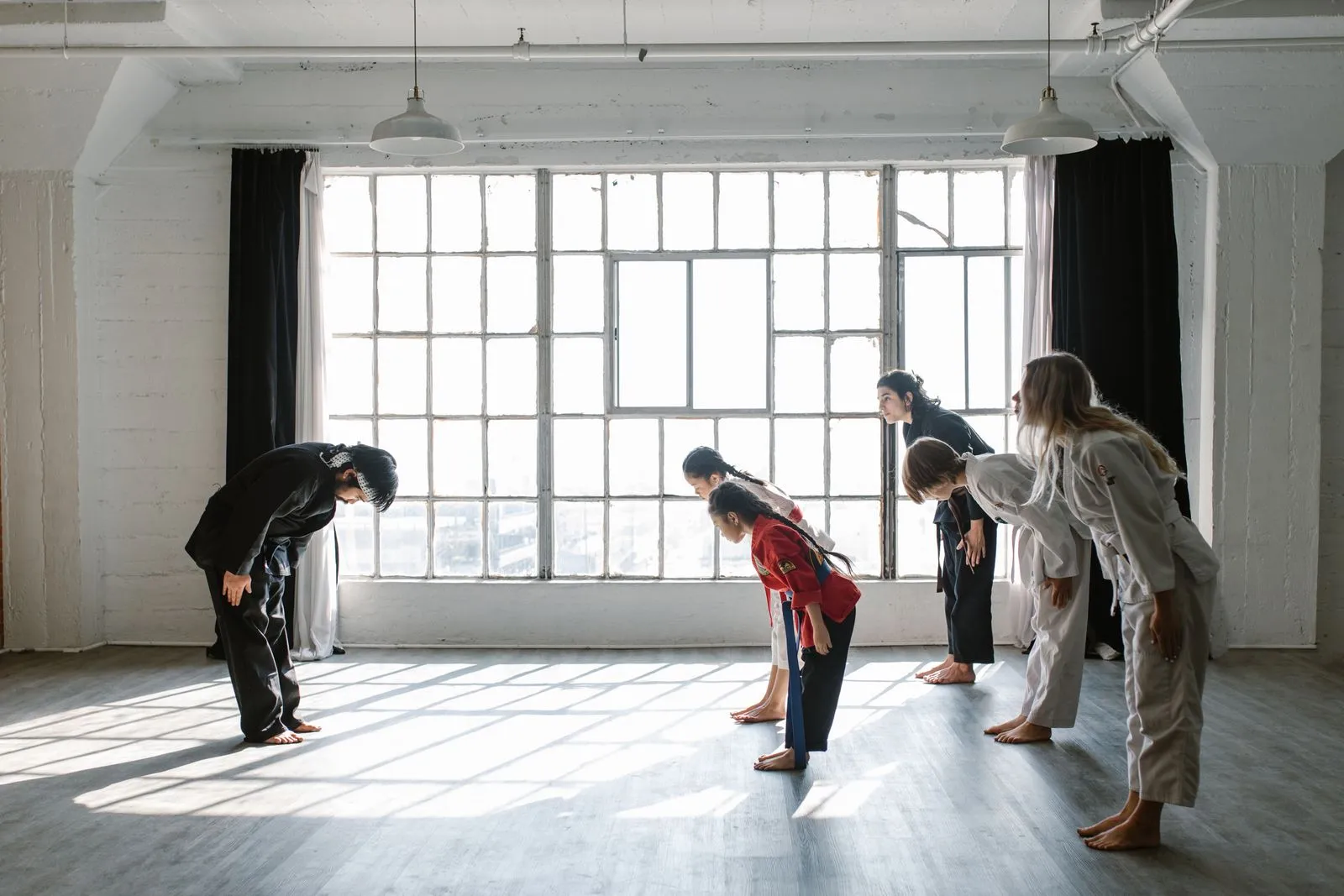
Schedule
Monday, Wednesday & Friday, 3:00–7:00 PM, 40 weeks during the school year and 8 weeks in summer. Students will train with their own age group.
| Time | Group | Focus |
|---|---|---|
| 3:00–4:00 PM | Arrival, check-in and a nutritious mealAll ages | A calm, predictable transition from the school day |
| 4:00–5:00 PM | Tier 1: Elementary SchoolAges 6–10 | Focus and motor skills |
| 5:00–6:00 PM | Tier 2: Middle SchoolAges 11–13 | Self-regulation and peer dynamics |
| 6:00–7:00 PM | Tier 3: High SchoolAges 14–18 | Leadership and de-escalation |
Each student's session
-
Step 1
Decompression & Nutrition
Students arrive from school, check in, and receive a healthy meal.
-
Step 2
Academic Power Hour
Required quiet study and homework time, with tutoring support, before any student steps onto the mats.
-
Step 3
Dojo Session
Shotokan karate training led by certified instructors: traditional forms (kata), physical conditioning and defensive techniques (kumite).
-
Step 4
Character & Leadership Circle
Group discussion of the Value of the Month (discipline, respect, perseverance, integrity) and how to apply it at home and in the neighborhood.
What students learn
- Martial arts instruction
- Age-appropriate Shotokan karate focusing on physical fitness, coordination and defensive skills.
- “Words Over Fists”
- A six-week conflict resolution and boundary-setting curriculum every student completes by month three.
- Character curriculum
- Weekly workshops by age group on discipline, respect and conflict de-escalation, built around a Value of the Month.
- Academic support
- Daily homework help at the center before students put on their uniforms (gis).
- Community showcases
- Quarterly belt promotion ceremonies that bring families and neighbors in to celebrate progress.
How we'll measure it
Attendance is reviewed weekly and compiled monthly. Social-emotional surveys are given in weeks 2 and 38. Student data is anonymized, and an end-of-year impact report goes to funders after 12 months.
| Measure | Target | Tool | How often |
|---|---|---|---|
| Youth enrollment | 75 unique youth enrolled | Electronic intake records | Ongoing, months 1–2 |
| Retention | 80% average weekly attendance | Check-in records | Weekly review |
| Martial arts mastery | 90% advance two belt levels | Practical rank examinations | Quarterly |
| Social-emotional growth | 85% show improved self-regulation | Devereux Student Strengths Assessment (DESSA) | Pre- and post-program |
| Behavior at home | 80% reduction in behavior infractions at home | Parent/guardian feedback surveys | Mid-year and end of year |